

The Gentle Drunk
March 21, 2012 in Auto-biographical

The Gentle Drunk
If you were a career old drunk in Dublin fair city in the nineteen seventies, then apart from begging, scrounging, watching the girls, and hoping for a hot meal, one other important consideration was “getting back to the hostel” in time.
“Hostel” was perhaps too fine word. “Flophouse” would be politically incorrect. The old warehouse buildings, that stood on the docks, alongside the river Liffey, had long since been condemned, but never torn down. The lumbering edifices were long past their prime, as tired as the weary old river, that nonetheless stubbornly persisted in flowing on through old Dublin town. The river never really hurried, it never really got excited. It was just there, always, reliable, just flowing along, doing its thing. In the same way, those old buildings were equally determined to always greet the dawn, regardless of fading glory. And falling plaster, broken windows, cracked ceilings, plentiful evidence of mold, dilapidated stair cases, dangerous floors, and unspeakable, ancient, stained toilets that stank to high heavens.
And then there were the drunks.
They would stagger out in the morning, and stagger back home at night. Clutching brown bags with cheap bottles of wine and spirits. Many would leave angrily, cursing at the idealistic volunteers from the local Universities. Mostly young women, with admirable “Mother Theresa” protective instincts.
I would watch them, including my girl friend, Dympna, gently administering to filthy old hags, combing old Mary’s lice ridden hair with kind words and subtle de-licing fluids. There were some equally idealistic young men as well, somehow still in the full flow of first manhood. When you still believe in an achievable, much better world, in which you are in the vanguard of the forces of Good. Before a weary cynicism creeps in. Before you start wondering.
At night, the same angry drunks would return, including the ones who had sworn they would never, ever, come back. Still angry, they would curse out the next batch of idealistic “save-the-world” volunteers, and stagger upstairs to fight over a bed. These varied from ancient steel and wire constructions that belonged in a museum, to extraordinary King Size monstrosities (usually housing two, three or four disgruntled occupants), to just plain mattresses strewn around the floor. If you went up there at night, maybe to deal with a disturbance, you were treated to the sound of several hundred men and women snoring in different rooms. Dublin produces a fine crop of drunks every year. There were usually a few awake, staggering to and from the urinals, still cursing, whining, or occasionally crying. In the middle of the floor there some old barrels, used as urine receptacles for those too drunk or infirm to reach the so-called bathrooms. I’ve seen four foot tall steel drums overflowing with freshly contributed urine. Emptying them out was a spectacular engineering challenge.
There was a seedy, depressing, unutterably failed air of melancholy about the place. These were mostly (not all) older men and women,who somehow had failed in their lives. Deep down, they knew it, and often wore that scowling, defiant, defensive expression, that spoke of their sense of deep injustice. It wasn’t their fault of course. It was somebody else’s. It was amazing what pearls of wisdom these denizens of this strange Other World would bestow on those around them. Many had it all figured out, and could lecture you for hours with a careful exposition on your failings. All you had to do was ask. Or get in their way. Or try and pinch their bed.
Ah, surely, as I said before, as an old drunk in Dublin fair city, apart from begging, scrounging, watching the girls, and hoping for a hot meal, one other important consideration was “getting back to the hostel in time”. The reason for that was that the early arrivals got the beds. The later arrivals fought over the mattresses. And the even later arrivals… well, they just had to flop down in the kitchen, on the floor. It was the only place left. It would be a strange, disturbed night, bodies everywhere, bizarre sleeping sounds, and the odd volunteer or two, sitting in a chair, watching over their brood. It was a time for thought, if you were so inclined, and if you were awake.
Thus, one night, I found myself awake, unable to sleep in my uncomfortable chair. I wondered what I was doing there. I was a student, an idealist, a dreamer and a reformer. You could have mentioned any worthy cause, and I think I would have jumped up and joined in a flash. I was the Universal Soldier of volunteer causes. In my own way, I simply meant well. Little did I know (but I was to learn later) how much the world mocks (and abuses) such naïve, albeit beautiful, dreaming.
I remember I was getting depressed. The place was sordid, it stank, everybody stank, everybody was grumpy, awkward, sullen. The slightest wrong word, look, gesture, and some old fart would take furious offense. He or she would then leave the next morning, cursing, and swearing they would never, ever, darken the hallway with their illustrious presence again. The occasional one was violent, and you had to watch them. I was grateful for my height.
The depression worsened. What was there to learn here? What was there to achieve? Nothing. It was a hopeless, diseased, putrid end-of-the-road last stop for a gaggle of filthy drunks. There was nothing there for me. Why was I there?
KA-BOOM!
The door into the kitchen opened with wholly unnecessary force, and one of our angry, violent drunks, burst in, trailing a rancid cloud of loud profanities. Big John. You had to watch him. Big John was always angry. He had bladder problems, and the shortest route to the bathroom, strangely, was through the so-called kitchen. The door, so rapidly opened, collided with a sleeping drunk’s head, with a frightening smack, and I winced at the wood-on-skull impact. A sleeping drunk, Benjy, surprised, woke up, and rubbed his head. He caught my expression, sympathetic, and just grinned. Wordlessly, he shook his head, and his expression beamed a message.
Hey! It’s alright! It’s just Big John! The dufus! I’m okay!
I looked around for a safer place for our sleeper to lie, but the entire kitchen floor was covered with bodies. There literally was nowhere else. I beamed that message to Benjy.
Sorry, dude, doesn’t look like there is anywhere else…
In silent answer, Benjy just shrugged his shoulders. He wasn’t worried.
Two minutes later, Big John was on the way back. He stormed through the kitchen, loud profanities in tow. Benjy heard him coming, and quickly got his head out of the way. Big John, with no consideration for anybody except himself, stormed out. The door slammed. Back to bed. Peace returned. Benjy made himself comfortable again, and dozed off. I was impressed with his composure. Most drunks would have cursed at Big John, and there would have been a ruckus. But Benjy didn’t take the slightest offense.
Fifteen minutes later, I was dozing off in my chair.
KA-BOOM!
Take two. Benjy got it in the skull again. He woke up with a start, rubbing his head again. I felt compelled to remonstrate with the passing cloud of Ugly.
“Jesus, Big John! Have some consideration, boy! You just smacked Benjy in the head!”
But the Angry Cloud didn’t listen. It swept out of the kitchen. I looked at Benjy, still rubbing his head. Benjy just shrugged. His eyes were actually amused. The unseen message hit me with its complete lack of anger or annoyance.
That’s twice! What a pudding that guy is!
I beamed back my reply:
You all right? Heck, I admire your patience!
Benjy wasn’t worried. Just a big grin, and he relaxed again.
Two minutes later, the Angry, Loud, Cloud of Un-Peace returned. Deftly, Benjy moved his head sideways, out of harm’s way. Then he went back to sleep.
Fifteen minutes later, I was dozing off in my chair.
KA-BOOM!
Take three. Smack! Same-same!
“Big John! For Christ’s sake! Have some consideration!” Now I was getting cross. My gaze went from following the Angry Cloud out of the kitchen, to Benjy, who was hurting pretty good, rubbing his head furiously. My expression was beaming this message:
That son-of-a-bitch! Are you okay, Benjy??
To my astonishment, Benjy, very much the injured party, was not too upset. Surprised, but not even remotely angry. His gaze followed the Angry Cloud out of the kitchen, and then he looked at me. Then he burst into a fit of the giggles!
Hey, Francis, can you BELIEVE that moron Big John??
Now I started to giggle. A few minutes later, the profanity laced Angry Cloud was on the return journey, but Benjy was waiting for him, pretending to be asleep. At the last second, he whipped his head safely out of the way, grinned delightedly at me,giggling, and went back to sleep!
Fifteen minutes later, I was dozing off in my chair.
KA-BOOM!
Take four. Smack! Same-same! There was no way Benjy could guard against the first attack. That got him in the head every time. But he had gotten wise to the Angry Cloud’s return journey. That one Benjy could avoid. By now, we were both in hysterics. There was something so ludicrous, so over-the-top about the Angry Cloud’s cussing and swearing, his forced march to and from the toilet, the furious indignation that his personal plumbing was not functioning correctly, the door slamming and the carrying on, that you couldn’t help but snicker.
What made it worse, as the night progressed, was that Big John started noticing the muffled hysterics, from all around the room. He started stopping, and asking, what was so Fu-fu-fu-fuckin’ funny?
Nuthin…
Nothing, we would say, innocently, and the whole room of thirty drunks, lying around the floor, would go off into more muffled hysterics. You had to be careful around Big John, because he could throw a punch. That made it even funnier, to be laughing at his expense behind his back. Benjy was completely into the swing of it now. He took the first wakening bang in the head with stoic endurance. Then he would lie in wait for the return passage. Wait until the last second. And then neatly twist his head out of the way at last second. The door would slam, Big John would be gone, for a while anyway, and Benjy would bob up happily, and look around the room with a triumphant expression.
Nah-nah-na-na-nah! He didn’t get me that time!
And off we would all go into peals of hysterics, tears of laughter pouring down our tired faces…
* * * * *
I look back on that night now, a long time ago, and I marvel at an unexpected lesson learned. I have remembered it. In the midst of seedy, decrepit, unutterably depressing humanity at its worst, there is still humor and kindness. Tolerance of others. Compassion, even. Benjy never took offense. Despite being smacked in the head and rudely woken up fifteen times in one night. He took it in his stride, and enjoyed the amusement that grew into unbridled hilarity. We didn’t actually speak one single word directly to one another, but on another level, purely through eye contact, we had a deep conversation.
That son-of-a-bitch! Are you okay, Benjy??
Hey, Francis, can you BELIEVE that moron Big John??
Ha-har-har! He didn’t get me that time!
The human spirit has great reserves of capacity, tolerance, and compassion.
There is hope. Amidst the sewage.
Yep, there’s plenty of sewage. But, also…
Plenty, plenty of hope. Warmth, even.
I smile every time I think of old Benjy, giggling delightedly, whipping his head out of harm’s way at the last second. And then gazing triumphantly around the room, eyes full of laughter, as if to say:
“See that? See that? Missed me! Nah-nah-nah-na-na!”
Francis Meyrick
Last edited by Francis Meyrick on March 21, 2012, 7:25 am
The Outlaw
January 24, 2012 in Auto-biographical (spiritual quest)
(I drove my motorbike to the sea)
I watched a dreamer by the sea
observe me,softly, haltingly,
His face was tired but not unkind
I sensed a windmill in his mind.
Alone upon the beach he stood
A member of the brotherhood
I saw the biker garb he wore
And knew I’d seen him once before.
Reflections from a dying wave
Shadows from the failing light
This was a man who once forgave
The angels of the restless night.
I heard him muse, but not to me
Some words that spoke most tellingly
That somehow he was trapped and caught
And reeling under scorching thought.
“This is a wistful day that peers
Uncertainly past many years
am I a Man or just a fraud
a pauper or a knighted Lord?
I’ve roared my Spirit down the road
I’ve kissed the Wind and drunk the cup
I love my Harley under load
I love the sound as gears change up.
A glimpse of Freedom on my bike
a thumping heart that’s almost whole
there’s really nothing just quite like
black leather on a tortured soul…”
I watched a dreamer by the sea
observe me, softly, haltingly,
His face was tired but not unkind
I sensed a windmill in his mind.
I am that pilgrim on the road
and Yes, I learned to lock and load,
just bring it on, my greatest ride
the meanest ever Dynaglide.
My Angel in this tainted deck
the Joker and his mocking grin
I told them both to go to heck
just shuffle well, and deal me in.
The season of my life and death
until I rattle my final breath
will pass behind in blurring rage
an entry on a crumpled page.
Riders of the perfect storm
just mock your pressure to conform.
To hell with all your stuffed up pride
We’re just some loners on a ride.
Why chase the buck and swarm like flies
but never ride the dream tossed skies?
Why elevate unending greed
into your only heart felt creed?
When summer’s done the flies go broke
your stocks and shares a puzzling joke
that puffed up sense of your own worth
gets shoveled under heaps of earth.
A glimpse of Freedom on my bike
a thumping heart that’s almost whole
there’s really nothing just quite like
black leather on a tortured soul.
I’ve journeyed through those never skies
I’ve seen the Light that never dies
I’ve heard that haunting, restless theme
I’ve dared to reach, and ask, and dream.
Francis Meyrick
Last edited by Francis Meyrick on January 24, 2012, 10:58 pm
Sensual Overload – The Snow Storm
October 31, 2011 in Auto-biographical (spiritual quest)
Sensual Overload, Emotional Push Back.

The Snow Storm
I remember it so well, although it was so many years ago.
Falling, falling. Alone. Not caring. Floating. Being buffeted. My jump suit rattling. My eyes drinking it all in. My mind, mesmerized, whispering the one word, over and over:
“Wow!”
It was in France, at a skydiving school at Bourges. I had begged the jump plane pilot to let me dive through a rain storm. I had done that. Several times. Now I wanted to free fall through a snow storm. He was a laconic, French, former military pilot, and he regarded me with a quiet, Gallic amusement. Nobody else was jumping. They were too busy drinking wine and partying. Trying to get off with the bar maid.
It was cold. Only this funny little Irishman, all the way from Ireland on his old motorbike, wanted to jump, desperately. He raised an eyebrow, dragging quietly on his ever present Gauloise cigarette, and I could see the humor in his eyes.
“Mais, pourquoi?”
Why? It was a good question. In answer, I shrugged, helplessly.
“Parce que…!”
Because! Because I wanted to! To see! To experience! To do it!
His weather beaten, slightly aloof, slightly cynical face studied mine. I knew what he could see.
Puppy eyes, begging him. PLEA-EA-EA-SE…!
There was the ghost of a smile in his eyes. He didn’t like many people. He had told me that, one late night, as we discussed Life and Death, God and Religion, until the small hours. He was an Atheist, with zero interest in any form of Theism. Until he met me.
I, on the other hand, was a serious, (admittedly ham fisted), Seeker of the Truth. Trying to keep an open mind. Trying to be aware of the arguments on all sides. Not a formal Christian, not a Muslim, not a Bhuddist, not an Atheist, not an Agnostic. But capable perhaps of seeing the strengths and merits of different arguments. Capable of explaining them. And I had brought a whole new thinking to his heart. For the first time in his life, he told me, he was prepared to at least seriously consider the possibility of there being a Supreme Being. He had thanked me for that, with a trace of wonder in his voice. “I have never met anybody like you”, he had said, and I had felt both honored and embarrassed. My perennial low self esteem had kicked in then, and I had hurriedly mocked my own credentials. He had taken it all in, that distant amusement back in his eyes.
And now I was begging him for a ride up into the skies. He chuckled quietly. Then he nodded. Okay…
* * * * *
It had been late in the day when we had finally taxied out.
Snowing heavily, with dark clouds, and a somber landscape. Few people were about. The Pilatus Porter aircraft, light as it was, fairly rocketed away from the runway, past snowflakes and doubts, and soon we were a small toy, a blip of nothingness, lost amongst the enormity of our tiny planet’s gaseous outer layers. The odd ray of blazing sun would suddenly burst through from above, blasting a billion tumbling snow flakes with life and radiance. But mostly there was a dull twilight, grey, off white, and dying.
And cold. Lots of cold. I shivered uncontrollably in the back of the large aircraft, ready at the door.
My mind, in its own, limited way, was red lining. There was so much to take in. So much to see. So much to admire. So much awe to feel, at our nothingness up there, surrounded by an alien landscape. And what of all we could NOT see? The forces at work? I shook my head, alive. So alive.
We reached our altitude, scraping along just below the clouds, in record time. For the run in, I had to hang out the door, and now the full force of cold blasted me into screaming numbness. He was looking around at me, obeying the pointed finger.
Left a bit… Steady… Steady…
Right a bit…
And then I was gone, and he, alone in his tiny box, rolled over hard, and plummeted to earth. His Gauloise cigarette hanging carelessly from his lip.
* * * * *
People.
Billions of people. Great swarms of people. If every snow flake was a human being, was this the world’s population? I fell, thoughts and impressions rushing through me. It was astonishing how many snow flakes there were in the sky. How small I was, falling. For one brief instant, I was being given the opportunity to truly grasp how nothing I was. How insignificant.
Ideas.
Billions of ideas. Great swarms of ideas.

If every snow flake was an idea, was this the sum total of Universal knowledge? I fell on, thoughts and impressions rushing through me. There were great forces present, and those forces were warping the snowflakes. I had expected them all to be falling one way. I had thought, for some reason, that it would be like the rain. With luminescent drops appearing below me, and whistling UP past my falling body. Stinging my face. But the snow was different. To my astonishment I was seeing something I had never thought about. Unseen hands were warping the snow flakes into great, flowing, moving, twisting, formations of snow flakes. Ideas were being twisted around, moving against each other, flowing and fluttering, fighting for supremacy. A billion flakes in this course, would suddenly beat against an opposing column of flakes arriving from a different direction. The two forces would twist together, spiral, float out, fight, and intermingle. Yet another column would swoop in, and another, each billion flake arrival churning the whole up into further swirling streams and currents. And I, blessed fellow, was here to see it. Never in my wildest dreams could I have imagined the Truth as it was playing out here: the massively powerful, unseen forces at work. I could see the results, the abrupt change in direction, the outflow, the spillage, the new arrivals… and the smallness of one Man. One little flake could do nothing against the Cosmic swirl. He could admire it, follow it, fear it, or struggle against it. But in the final analysis, each man was nothing.
Almost… nothing.
Self determination.
Billions of ways to fall. Moved by this force, or that. A man can be an enthusiastic follower of this great swirl, or that great movement. Or have faith in a different, incoming armada of brand new snow flakes. Oh, he could struggle against it. He could try and plot his own course. But he would find it hard to fall alone. The Great Forces would try and sweep him up and along, determine his direction, his course, his view. It would be a truly unique snowflake that charted his own fate…

Still falling. Still falling. Checking my altimeter. Wrist mounted.
Maybe try a Delta. Bring my arms back. Back. Back…
My head goes down, and my speed picks up. My fall is departing the vertical, and becoming more of an angular fall. I am now moving across the ground. Even more flakes are now whizzing at me, ideas coming at me from all directions. They would coalesce on my goggles, and obscure my vision, but I’m going fast enough that they can’t. I would have to stay in one column of flakes, and remain there, ignoring everything else, before my goggles and sight would be affected. Perhaps I would be blinded. The thought is uncomfortable. There is so much to see! So many ideas!
I turn my head, and see a beam of moving light exploding inwards towards our “pale blue dot”. It brings relief, and joy, and purity. Color.
Responsibility…
I look down. Getting lower. I think of my parachute. The red and white Papillon. I have packed it carefully, and mostly they open very reliably. With a loud crack, that you can hear clearly on the ground. If anybody was watching. Listening…
Probably not. Sky divers don’t jump through snow storms. When it’s cold. They prefer to jump when it’s warm and sunny, and when there’s lots of pretty girls watching. The famous “after-dive” was as important as the dive. The after-dive was what really got your heart pumping.
Few skydivers dive alone. Few thinkers try and think alone. Few snow flakes try and swirl alone.

Just a few. The untouchables. The outcasts.
Or, perhaps…
The dreamers…
Francis Meyrick
Last edited by Francis Meyrick on October 31, 2011, 1:44 pm
Writing Challenge (1)
September 26, 2011 in article about writing
Sunday, September 25th, 2011
Writing Challenge (1)
What do YOU think? Where are YOU at? 
For my part, I’ve been reading quite a bit the last while, and doing some studying. Here follow, in no special order of significance, some areas of thought and non-thought. “Thunk & Muddle, let’s get in a Huddle “. I’ll cover some areas I have written about, and other areas we all, as writers, might consider delving into. How about:
1) Writers’ Harbor, the effort of writing, cyberspace, and the success or failure of cyberspace communities
See my, well, “efforts “: (click on any link)
A kinder, more gentle cyberspace?
Piano Lessons
Bounce (1)
Bounce (3)
Curiosity (part 1) “Introduction “
Facing the Devil
Intermezzo
On how to write a Story
But what do YOU think?

by Katie “Don’t bogart that joint, my friend… “
by Katie “The Dark night of the Soul “
by Brian Armour Travels in Cyberspace
I was hoping to see the new software for “Families” up and running by now. But we are still waiting for the coders. It ain’t easy. The idea is to have private meeting areas, with a range of additional software tools available, for both members and Family Moderators. To encourage participation, and peer support. One thing that worries me is the new member who feels left out in the cold. To us hardened old cynics, publishing writing or comments on a website is nothing new. Engaging in polemics, writing political satire, or attempting to make sense of the buffoons running the United States GrabaMint, is nothing new. Nor are many of us too upset by having our views mocked or ridiculed. So what? Up yours, Patrick O’Flaherty, you old fool, see if I care.
But we mustn’t forget the newbies. I’m often torn between wanting to offer what I think are brilliantly helpful suggestions (okay, okay, I know I’m wide open here, just give it your best punch…) and worrying that I might upset somebody. It usually turns out that you are dealing with a mature spirit, who laughs off my cautious private messages (“not trying to upset you now, just trying to help”), and then we move ahead full steam. But until you kind of size up whom you’re dealing with, it’s wise to be careful. You inevitably will meet people who have spent years writing from-the-heart poetry and stories, but who have hardly ever shown their work to anybody. For them folk to gather courage and post it to a website (“Heavens! You mean ANYBODY might read it?”) takes a lot of moral courage. It’s like they are opening a very fragile part of themselves up for scrutiny. Even the rough old sods like me, need to learn to tread gently. Until such time as people blossom forth a bit.
That’s another reason for “families”. One of the many options I want writers to have is that they can elect to initially only post to a small selection of readers. If they so want. Then, having dipped a cautious toe in the water so to speak, and discovered our calm waters, then they might decide to publish to the whole site.
People come and go. Sometimes it’s sad. You’ve never met them in the flesh. But maybe you’ve touched them in the Spirit. It’s hard letting go sometimes.
You want to say: “Don’t Go! Stay here! We’ll miss you! ”
But that’s something I’ve had to get used to, in cyberspace. I respect that. I don’t think we should ever put pressure on a fellow sailor. Sometimes people just need a break. A rest. Sometimes they come back after a while. Sometimes not. But again, I’m hoping to offer a bit more support to writers with the “Families” software. To make it easier to know who is missing, or who is maybe lacking confidence in their work. Who needs a bit of moral support.
On the flip side, it’s pretty impressive how many cyberspace relationships actually end up going much deeper. People meet up, become friends, even lovers. Oh boy, the power of the binary system!
Cyberspace, I have often said it, can be a force for Good and Not so Good.
And occasionally, Pure Evil.
It’s all too easy for somebody to build up a grandiose aura of knowledge and wisdom, and to recount endless sagas of amazing past exploits. The truth can be startlingly different. Then again, one well written story, article or poem, may hit a reader’s spot so accurately, that a contact is made on a very deep and meaningful level. People who might know one another in a passing social context, in a superficial way, might never connect on a deeper, more intimate level. But one good story or poem… and people may find that they have cut right past the usual time consuming “getting to know you” routine. They may have connected perfectly.
It never surprises me when I hear, read, or see Internet relationships quickly becoming very serious. Nor does it remotely surprise me when it all goes horribly wrong. That’s Life. In all its phases…
One thing IS for sure: Cyberspace WILL become more and more pervasive.
So give it your best shot: how do you feel about Cyberspace?
How do you feel about Writing Communities in cyberspace?
How do you feel about our little fledgling Writers’ Harbor?
Come on, Team! Let’s hear those keyboards all ah-clacking, those binary digits calling, and get those creative minds whirling busily…
Francis
(the Muddled One)
Last edited by Francis Meyrick on September 29, 2011, 2:53 pm
Dropping Anchor at Writers’ Harbor (2)
August 30, 2011 in Uncategorized

Dropping Anchor at Writers’ Harbor (2)
8/29/2011
Hi guys,
As we approach our first 100,000 “hits” on Writers Harbor (it’s 97,125 as of just now), I want to ask you all to put your thinking caps on.
First, I have been enjoying WH all the way through, since January 2007. It’s stimulating, challenging, and you often make me think. You encourage me to scribble. You even tactfully overlook my grammar goblins. Thanks for that.
Now, activity on the site. If you notice, the trend is upwards. More activity. More articles, more comments. Hits counter shows a lot more visitors.
Many of you are experienced writers and readers, and many of you have seen other writers’ websites come and go. Rise, and fall. Prosper, stagnate, and slowly decay. There are many reasons for this. I list but a few:
1) after the first burst of enthusiasm, people realize running a website is hard, often tedious work. It takes time, money, effort, and you are constantly dealing with software issues. It’s like you are always beta testing something or another. You fix one problem, but then you find “the fix” has caused another one. Right now, I have a list of THIRTY-FIVE required tweaks, being slowly addressed as we speak. There will be hundreds more, as time goes by. It’s a constant process of development. It never stops. People just don’t realize that.
2) People think it’s easy: you get a coder to write the software, or you buy something off-the-shelf, and you’re in business. Hey-hey, easy. In practice, people spend a lot of money on software promising all sorts of wonderful things, but so often they end up disappointed. And frustrated. And then give up. Some of the advertising for canned writers’ websites, straight out of the box, is totally misleading. Even fraudulent. Some jokers called “Alstrasoft” keep taking people’s money for reams and reams of basically garbage code. They are not alone.
3) trolls and other unpleasantness. Enough said! We’ve all seen it, and been shocked at the level of vitriol and hate.
4) Differences in philosophy and culture. One taste does not suit all.
I’m sure many of you could expand on these four points. What I want to bring up is how I’m hoping Writers’ Harbor will quietly expand. To achieve this smoothly, with continuous software monitoring, evaluation, and upgrades, that is where I’m asking for your input. If we have fifty writers in a few years time, then that’s fine by me, if we’re all having a good time. But if we have five hundred, or five thousand, that would also be very nice. It will take some work though, and one guy cannot hope to run all that himself. Nor would such an arrangement, with one guy calling all the technical website shots, be healthy. So let’s think about some principles that we can adhere to, as we wade through all the technical headaches and political quandaries we are bound to encounter. I’m sure you can add in some more yourself.
Principle # 1
Peace. Compassion. Be gentle. Passion is good, but the “soft word breaketh the bone”.
Principle #2
Diversity. Tolerance.
Principle #3
Technical Flexibility.
Principle #4
Extraordinary efforts to encourage young writers, or disadvantaged writers. People with great stories to tell, but poor technical writing skills. A non-judgmental, supportive effort.
Now to elaborate on these principles:
Principle # 1 seeks to make people feel welcome and safe in the Harbor. By default, we allow people to publish direct to the website, both articles and comments.
But that is a “privilege” and not a “right”.
I have the software capability to “fix it” so a contributor’s comments do NOT appear straight away. They arrive in my mail box first. They get looked over, and are then sent to the website. I have had to use that a few times. Now I am very, very reluctant to kick anybody off the site. Even trolls. They too are human beings, and one wonders what makes them so bitter, angry, twisted or malicious. I emailed with some people that turned out to be seriously hurting. So “banishment” is a very, very last resort. I’ve never actually done it yet. I’ve had people who didn’t come back, but none, (apart from spammers), have been booted.
This is a type of email a troll might get, and this one is based on… yep, you got it. Truth…
“Dear ToHellWithYourGranny,
Thank you kindly for your recent contribution to Writers Harbor. I am grateful to you for taking the time and trouble to submit this article. We are anxious that you enjoy the site, and feel supported as a writer here. It is not our intention to be censors, or Cyberspace Bullies. However, on reviewing your work (comment) I am a bit concerned. Thus when you say this is the “typical comment I might expect from a sexist, fat bastard” I feel you need to perhaps move beyond mere labels, into the realm of argument. Why do you feel the author is sexist? And why does this make you feel displeased? What, in your view, is the connection between the author’s body mass, and his line of reasoning?
I would encourage you to look over your article (comment) and to re-submit it. I look forward to your reply…”
( he didn’t come back…)
Now I know we are walking a fine line here, between trying to keep the waters calm, and the dreaded C-word. Censorship. That is why I am so interested in the concept of “Families”. The software has been on the cooker now for a while, and I’m impatient to get on with it, and start beta testing. I know we will have a bunch of problems with it, but that’s the only way to get a working result.
Let’s side step here and talk about “Vicious Writers”. Here was a well established, productive, friendly group, looking for a new home in cyberspace. That is exactly the sort of homogenous group that I would like to give an environment, in which they can run their own affairs. What I’m talking about is the ability for people to join their old “Vicious Writers Family”, elect/appoint their own moderators, and set their own policies. Once that is set up, then the power to “intercept troll work” will rest with that family’s moderators. I’m basically OUT. My idea is that the family decides a whole range of issues. And it is for that reason, I want each family to have its very own discussion board, accessible only to family members. It may never get used. That’s not a worry. The OPTION is there. Similarly, the family can decide joining criteria, if applicable. I have no idea in the future, what Family Members will want. A group might want a closed group, with only very select membership. That’s fine by me. Other Families might want a certain age group, or philosophical/political/sexual/religious outlook, etc. It’s not for me to dictate any of that. Nor can I, if the site grows beyond a certain size. For the site to quietly develop and grow, in peace, you absolutely need mass participation by talented individuals, who see “their Family” in a special light, and who want to make it work, and who want to support fellow writers.
Who will, for instance notice, if somebody goes oddly quiet. It doesn’t take much to send an email: “What’s up, doc?”
Let’s look at some more examples. People have asked me several times how I feel about “read requests”. That is a highly formalized request, whereby somebody can send another writer a standard form, that in effect says: “Please read my story”. Now personally, I don’t think that should be a default arrangement right across the website, but if particular FAMILIES want that, then I would like that to be one of the many options available to that particular family. Settled by vote, maybe. The problem I see with “read requests” is that you risk losing your best writers. What happens is that somebody reviews the good writer’ story, and then sends a “read request”. Now there’s a moral conundrum. Just because somebody reviewed your story, are you now OBLIGED to read theirs? I’ve seen good writers swamped out, demoralized with read requests. And sometimes, these requesting writers felt that they were “entitled’ to be read, and capable of even getting nasty about it. So my personal, subjective view, is that it should not be a default arrangement, BUT, if a Family wants it, then they should have it.
Another example: Some websites aim to encourage comments and participation, and they do that by requiring you to post, say, three comments before you can post one story. Three comments, one story. Six comments, two stories. Etc. I don’t criticize it, but, no, I don’t think it should be the default arrangement right across the Harbor. Why? Because it tends to lead to shallow, routine, non-comments. “That was nice”. And it kind of conflicts with my libertarian instinct. The less rules, the better. The smaller government, the better. I tend to think that if you want to read only, and not join the site, and never write, well, go ahead. Be happy. From the hits counter it is obvious we have many, many readers (90%) who never join. That’s okay. Notice we do NOT make it an obligation to join before you can read, like some sites do. Similarly, if you just want to post, and you don’t want to comment, well, good luck, have at it. The point is I’m reluctant to dictate, but if a particular FAMILY wants that requirement, well, they should have it.
Another example: the default arrangement is that you can only be a member of ONE family. But any member can go into any Family and visit. Unless THAT Family says otherwise. Let’s say we have a family for gay writers, who want to discuss workplace prejudice and discrimination. They might decide that their stories and articles are for their family only. That’s fine by me.
Another example: say the retired Vietnam helicopter Pilots family wants to ascertain members eligibility first, and require proof of service in Vietnam. Fine by me.
So the default arrangement is very loose, and everybody is a member of the default family to start with. If you want to stay there, fine. If you want to leave us (sniff!) and join a Family, great!
I have absolutely no idea what Families might appear down the road. I’m not worried. I want to delegate as much autonomy, as quickly as I reasonably can.
People have asked me a lot about “rankings”. I’m not wild about that. I tend to think you risk people taking themselves too seriously. But if a family wants that, sure, we’ll try and write the software for it.
One area that worries me is “young writers”. That is the life blood of the future. How do we ESPECIALLY encourage young writers?
I ask you how do we measure success on Writers Harbor? I believe one of the yardsticks will be the degree to which it runs itself, and diversified, local decision making (Families) by many talented individuals, results in a busy, yet CALM creative environment. No hate. No trolls. No boring crudity and blatant, tasteless pornography. There are so many sites that will happily cater to that sort of shallow stuff, why park it here? Let’s write. Real, honest writing. Just Art, for Art’s sake. The LESS central government we have, the better.
I will leave it there for now, and ask you to give me your feedback. I’ll add to this as I think of more issues. Lastly, bear with us as we beta test new software, especially the Families trial. You just know it will be a headache. It never, ever goes smooth from the git-go.
Happy writing. Give ’em hell.
Francis
Last edited by Francis Meyrick on August 30, 2011, 8:06 am
A Blip on the Radar (Part 28) “The Immarsat Problem “
August 17, 2011 in Auto-biographical (tuna helicopters), Blip on the Radar
A Blip on the Radar
Part 28: The Immarsat Problem
I worked on different fishing boats, for varying periods of time. The longest straight run was one year, the shortest was a holiday relief for two. Some Fish Masters I really liked, one or two were hard to get along with. The odd one was miserable. The sort of guy who barely acknowledges your existence. If only the helicopter would fly by itself, he would be much happier. The pilot was a necessary evil.
Such a one I was sailing under, for a holiday relief, and the food was terrible. The rumor was that he spent it all on gambling (and losing), and then stole it out of the ship’s budget. I hadn’t seen a steak for weeks. The odd beer was handed out as if Christmas had come early. I was fed up with rice and chicken. We didn’t fly much, because they had never figured out how useful the helicopter was. He didn’t catch much fish either. Duh…
I was just biding my time, collecting a pay check, reading and writing, occasionally flying, when an unexpected opportunity presented itself.
All of a sudden there was a big problem:
the Immarsat had broken down.
Now that device was our main communication link. Voice, fax, all via satellite. It was an essential tool. They were trying hard to fix it, and the Fish Master was coming unglued. Both the Radio Operator and the #2 were copping it. There was a lot of screaming going on. But it couldn’t be fixed. The screen was black. Nothing doing. No life. Kaputt… Despite all the frenzied efforts.
After two or three days of this, I was sent for. All of a sudden, the Fish Master was now being really nice to me. Have a brandy.
Sure…
I knew what was coming. Could I have a go at fixing the Immarsat? I pulled a thoughtful face. They all looked at me anxiously. Have another brandy.
Sure…
I knew full well that if they couldn’t fix it, it was most unlikely that I could fix it. But as long as the brandy was flowing, I might as well go through some motions of looking technically competent.
“What’s the problem”, I asked.
I knew full well what the problem was: the stupid thing had quit working. The screen was black. But it bought me some time, and maybe another brandy, before I had to reveal my total ignorance. They filled me in at great length. They might as well have told me that the “swichsco filter had mish-mexed with the parallel infractor”. I had no clue what they were talking about. But I played the game, and kept my face straight. I dragged out the “looking knowledgeable” bit as long as I could. After a while though, they were looking questioningly at me. It was obvious that I was to make a show of expertise. I racked my brain. What could I say?
Ah… Brainwave…!
“Do you have a User’s Manual?”, I asked, all brisk and officious.
A User’s Manual was duly produced, and handed to me. I flicked through it importantly. It was in Chinese. I couldn’t read a word. Aware of the total absurdity, I nonetheless continued flicking through it, until I found a diagram. This might as well have been the firing mechanism for a nuclear trigger, but I pondered it -wisely – like a veteran nuclear scientist. I was now sitting at the silent machine, with the manual open, and I was surprised to find an open box of chocolate liqueurs placed beside me. Followed by an open bottle of fine brandy. Help yourself.
Oh…! Well, I don’t mind if I do…
I had been at sea for six weeks, and I hadn’t seen rum filled chocolate liqueurs for years. I duly helped myself. After a while they left me alone, while I continued my important work. Demolishing the rum filled chocolate liqueurs, and sampling the Fish Master’s brandy. Errr… I mean, fixing the Immarsat. I knew I couldn’t keep this going for very long, but it was going to be fun while it lasted.
Looking at the problem, I couldn’t even begin to think of a solution. It was dead. The power was connected, so it wasn’t that. For some bizarre reason, I pulled the machine out, and looked at the back. I don’t know what I was looking for. A loose wire, or something. To my surprise, I saw a small black switch that said, in English:
Hm. I wonder what would happen if I pressed the reset? Ho-hum. Can’t do any harm. So I, nuclear scientist extraordinaire, pressed the RESET button. Instantly, there came a loud buzzing, and the sound of a fan coming on. I jumped back in alarm. Then the screen started flickering. Within seconds, I was looking at a working, live, ready-for-action, fire-breathing Immarsat!
Wow… I fixed it!
I sat back and looked at it. Damn, that was something. They had spent three days cussing and yelling, and I’d fixed it after twenty minutes, half a dozen chocolate liqueurs, and three stiff brandies.
I looked at the brandy bottle. And the remaining chocolate liqueurs. And a ghost of an idea started to trip indelicately across the threshold of my infernal mind. The more I pondered the idea, the more it grew into a brilliant idea. And the more it grew, the more details I added in.
Hmmmm…
Hearing footsteps coming, I quickly switched the machine OFF. The sad, black screen returned. When the Radio Operator looked in, I was wearing a studied expression of serious concentration, pouring intently over the diagram. To his query, I barely looked up from my horrendously difficult task, and he got the message, and tiptoed gently out, shutting the door quietly behind him.
Seeing as they were sure to be coming in once in a while, to check on me, I thought I’d better put on a good show of trying. I fetched a screw driver, and started pulling the panels off. Now the interior gubbins were revealed. Next task was to pull some obviously very important motherboards out of their clips, and stack them in an awesome looking pile. The fan came out easily, and soon I had done a passable impression of total destruction. After that, it was easy. Lean back, enjoy my paperback, and the chocolate liqueurs, and the fine brandy. Remy Martin, if I remember…
Once in a while I would hear footsteps coming, and then it was just a case of hide-the-book, and get down on my knees, and be real busy peering-into- the- inner- workings of the Immarsat. Maybe screwdriver in hand. Or a pair of pliers. Or a soldering iron. I could see the awe in their faces. My street credibility had shot up into the stratosphere.
The next morning, when the captain was visiting, I was plenty busy stripping the insulation off the end of some wire I had brought down. Then, while he was there, I soldered some spurious pieces of wire together, and practiced crimping some electrical fittings I kept for the helicopter. He was totally awed, and made the mistake of asking me if I needed anything. I sighed, and looked tired, and told him my head was hurting with the effort. I showed him the diagram, implying it was all very difficult for a helicopter pilot turned nuclear trigger mechanic. He looked very sympathetic. However, I told him, with a straight face, my brain always worked better after a decent STEAK. His face lit up.
Meo ountie…
No problem. The Fish Master had his own personal freezer, and it was out of this there was produced a fine T-Bone steak. I nodded approvingly. Yes, that would do just fine. Thank you.
I kept it going for three days, several fine steaks, plenty of brandy, lots of tasty snacks, and until I had finished the paperback. By the evening of the third day, I reckoned it was time to finish my little mid Pacific holiday, and present “the miracle”. When the captain finally walked in, and there was his beloved Immarsat glowing away, all bright and cheerful and working, he practically kissed me.
If there had been any suspicion of my capability, or even my motivation, such unworthy doubts were now swept away in an orgy of back slapping and presents. They were thrilled with me. I walked around the ship like a conquering hero. Damn, I was good.
* * * * *
The story could have ended there, quite happily, and no one would have been any the wiser. I was only serving as a holiday relief pilot, and soon we would be in port, and I would bid my farewell to this ship, and go back to my own, which was coming out of dry dock.
But Fate has a strange way of coming back to haunt the man who gets too big for his boots. The man who tempts Destiny by getting way too clever, is asking for a slap down. For retribution from the Great Presences that watch over us. As a helicopter pilot, I should have known this.
We were on the way back, and I got an urgent call to the bridge. One of the radar installations had failed. Please, would I be so kind as to fix it! Everybody looked expectantly at me. They had even already looked out the manual for me…
Oh, oh, dear…
This time I couldn’t fix it. There was no way. I remember getting down on hands and knees, and peering around the back.
Damn, no RESET button…
I was forced to admit defeat, and everybody was very disappointed.
And, sadly, there went my street credibility…
up in smoke…
Francis Meyrick
(c)
Last edited by Francis Meyrick on August 17, 2011, 3:34 pm
Ik herinner mij Nederland (1)
August 15, 2011 in Auto-biographical (youth and childhood)

IK HERINNER MIJ NEDERLAND
De Tekening
Ik ben in Schotland geboren, van een Engelse vader en een Ierse moeder. Maar mijn familie verhuisde naar Nederland toen ik erg jong was. Pa werkte bij Philips. De gloeilampen fabriek.
Daar leefde ik tot ik zeventien jaar oud was. De hele tijd in hetzelfde huis, op de Pasteurlaan 18, Eindhoven. Met zeventien ging ik naar Ierland, waar ik zou blijven tot ik vijf en twintig was. Daarna London. Ik wist het toen niet, maar ik zou nooit meer in Nederland leven.
Voor mij was het een vreemde tijd, daar in Eindhoven. Ik kijk erop terug, meer dan veertig jaar geleden, als op een droom. En niet altijd een goede. Het is niet gemakkelijk jezelf objektief te beoordelen. Mischien is het onmogelijk. Ik vertel dus door, met deze geschiedenis, maar ik zeg er eerlijk bij, dat ik waarschijnlijk flink bevooroordeelt ben…
Op de kleuterschool was het allemaal normaal, zeg maar, ik herinner me weinig slechte ervaringen. Behalve een paar. “De tekening” was er daar eentje van.
Ik had een ontzettende aardige juffrouw op kleuterschool. Ze was altijd zo enorm enthousiast. Noem het maar, ze vond het geweldig. Je hoefde eigenlijk alleen maar de klas binnen te trappen, en haar gezicht klaarde al helemaal op. Ik was natuurlijk een beetje speciaal, want ik was eenvoudig niet zo maar een stom gemene knul. I was… Nou ja, ik wil niet zeggen “brilliant”, maar toch wel verhipt goed. Vond ik. Het feit, dat deze gevoelige juffrouw wist dat het niet altijd gemakkelijk was voor een “Engelse jongen” die ondermeer een talen problem had, was bij mij niet binnen geslagen. Ik was af en toe een beetje eenzaam, en ik worstelde een beetje met kommunikatie met andere kleuters. Als ik zo terug kijk, denk ik dat deze kleuter leraar gewoon een goed mens was. Een van de vele, die ik in het leven tegen gekomen ben.
Ik probeerde altijd goed werk te doen. Speciaal voor haar. In een boek kleuren, nou ja, het interesseerde me niet zo, maar ik hoopte altijd dat zij het mooi vond. Dat deed ze altijd. Met gekleurd papier werken, uitknippen en lijmen, dat kon ik ook goed. Maar tekenen kon ik helemaal niet. Er waren anderen daar die dat goed konden, maar mijn kleine knobbel was anders samen gezet.
Op een dag was ik eindelijk klaar met een geweldig project. Uren en uren had ik daar aan gewerkt, als een slaaf.
Ik was maar een jaar of vijf, maar ik weet goed hoe blij ik was met mijn tekening. Het was een poes. Zwart met wit. De poes stond daar maar heel dapper te kijken. Met zijn staart prachtig om zijn voorpoten gewikkelt. Een trotse poes. Een majestueuse poes. Een poes om van te dromen. Ik was fenomenaal gelukkig met mijn werk. Toen ik helemaal klaar was, stapte ik naar het bureau van de aardige juffrouw. Ze zag me komen, en begon al meteen heel gelukkig te kijken. Dat was de normale reaktie, en voor mij altijd bewijs (als of ik eigenlijk bewijs nodig had) dat ik verrekt speciaal was.
Ik legde mijn keurig werk voor haar neer, en nam een bescheiden stapje terug. Ze zag meteen hoe fantastisch mijn werk was, en haar hele uitdrukking begon te stralen.
“Oh, dat is zo MOOI!”
Ja, dacht ik, het is mooi. Geweldig werk, vindt u niet?
Ze was ziels gelukkig. “Kijk eens, kinderen!”
Ze draaide mijn kunstwerk om zo dat de hele klas het goed kon zien.
Iedereen keek.
“Kijk eens! Francis heeft EEN PRACHTIGE RAT getekent!”
Een… wat?!?
Ik stond daar, zielig, met mijn mond open. Een RAT??
Ben je helemaal belazert, meid? Pot-ver-dikkeme…!
Een vieze rat?
Ik was beledigd. Ik wilde kei hard schreeuwen:
“Een rat? Het is een POES! Bent U helemaal BLIND?”
Maar ik zei niets. Van teleurstelling draaide ik naar woede. Een stille woede.
En dat ging dagen lang door. Ik weigerde botweg haar zelfs aan te kijken.
Ze had me in mijn kleine ziel totaal gekwetst…
Arme juffrouw.
Maar het WAS… een geweldige POES.
Francis Meyrick
(c)
Last edited by Francis Meyrick on August 16, 2011, 9:22 am
ABHORRENCE of War
August 12, 2011 in Short Stories
Abhorrence of War
A counterweight to the article published on this site, called “Acceptance of War “
CLICK HERE TO SEE THIS ARTICLE
Firstly, I welcome civilized, constructive debate, and I applaud our WH member “Faxe ” for taking me up on my Internet challenge to post his thoughts on Writers Harbor.
He has done so, and in a stimulating manner. 
What brought all this on?
It started me me watching a Youtube video, the one below.
The Korean War for me is just one of those horrendously bloody conflicts, a state of war without end, with no victors. Only losers. The civilian population of North Korea is still losing. Starving.
Anyway, I gave vent to my feelings with this comment:
Low and behold, that drew a response. This one:
That led me to visit that poster’s YouTube site. And here it is:
(http://www.youtube.com/user/Faxe90Swe)
And straight away, the marching troops, and the fine martial music, and the drawings of soldiers getting gloriously slaughtered,
(stirring music plays),
and patriotically blown to little bloody bits,
(patriotic music plays)
…just got my frickin’ TEETH on EDGE. It brings out some deeply held, furious prejudices.
Small wonder that I retorted with some irritation as follows:
That made me feel better, and made a few points, but hardly constitutes a reasoned argument. The next step was to contact Faxe in a polite manner through YouTube, establish a rapport, and invite him to a structured debate.
And, now, here we are. (Rolls up sleeves)
Below follow quotes from his article (on this website) and below them, my two cents worth.
Correct. And I still sense a degree of that de facto veneration and glorification of Man’s stone age, caveman brutality.
And that is good. We debate, re-look at our own arguments. We are forced to constantly re-examine the veracity of our own dearly held Articles of Faith.
It would be easy for me to twist this, and excoriate you for being a war monger.
In fact, that would not advance our discussion, because what I think you actually mean is that you accept it as “A permanent fixture of Man’s insatiable urge to inflict his will with brute force. ” I accept it is a sad constant.
I do not accept it as an unavoidable, perennial, normal state of affairs. One day, there will be no more wars. One day, the Human race WILL look back at the early primitives of the Dark Ages of the 21st century, and shudder.
I agree the impact on civilian society is horrendous. But you appear to wholly dismiss the impact and cruelty of war on the combatants. How about the poor, conscripted slobs who had no choice in the matter? We want to remember the glorious Sandbox War, where the Great American Saviors, wrapped in shining white armor, defeated the ALL BAD, NASTY HORRIBLE soldiers of Saddam. So a vast bombing campaign spilled thousands of tons of bombs onto Saddam’s front lines. Were they held by the “elite ” Republican Guard? hell, no. That was the place for the cannon fodder. The conscripts. The small shopkeeper, the farmer, the milkman, the carpenter, the school teacher. Blown to smithereens, or driven mad, in the name of higher politics they barely understood, and never voted on.
I am not extrapolating from there, and condemning the entire war. But I point out the intense suffering of the (innocent) “combatants “. (I might also remark that the US for many years SUPPORTED Saddam both militarily and financially. It is hard to believe that during that time the incredible atrocities committed by the Baath Party against their own people were concealed from American Diplomats.)
I don’t know what your sources are, but I’m highly skeptical of the “honour ” and moral code of “the gentlemen leading the armies of this time “. It is true that weapons of the 20th and 21st centuries have greatly increased civilian casualties, but part of that was deliberate planning. The mass fire bombing on German Cities in the later part of World War Two was cold bloodedly aimed at civilians. It was mass murder. Revenge. Genocide.
We didn’t have news men and camera men back in Europe during the 16th, 17th, 18th and 19th centuries. But if we had fuller documentation, I think you would find those wars were just as brutal towards civilian populations in intent, as modern warfare. Many of those armies “lived off the land “, and that is where your percentage of 80% soldiers killed versus a mere 20% civilians, is more than likely hopelessly skewed. Many of those armies consisted of the worst dregs of society. There was very little “honour “, even amongst the top brass. I think your notion there is tainted with Romanticism.
Having said that, in defense of your argument, it is interesting how during the American War of Independence we see tremendous writing. Just look at the Constitution. Most people were far better read than today. It’s a hard pill for people today to swallow, that previous generations were in fact far more advanced culturally. So, yes, there was finely spoken outrage at excesses committed. But these fine words of humane protest could not possibly hope to ameliorate the fundamental Cave Man nastiness of war.
There will always be celebrated exceptions. But “one dove Peace does not make “.
I agree. The political war, or “People’s War ” developed at a frightening gallop. The atrocities committed in the name of lofty ideals are never ending. I think in some ways I prefer the Cave Man. Who makes no bones about wanting to bash in your skull, because he wants your wife, your food, or your bear skin. I know where I’m at with him.
The Communist revolutionary who imprisons me, tortures me or kills me for my own good, now that’s really infuriating.
I keep thinking of an outstanding book, that I recommend to everybody. It’s called “The Road to Serfdom “, by F.A.Hayek. I reviewed it on “Amazon “, and here is my review.
I have read it several times. I shall read it again. It leaves me with a disturbing sense that there is an almost inevitable slide into humbug and falsity, when people get “organized’ into a large political group. “The worst get on top “, because, like Franklin D.Roosevelt, the darling of the Democrats, these cynical manipulators know how to dress their selfish, (morally corrupt, power hungry) desires up in the shining armor of righteousness and wisdom. This slide into greater and greater “virtuous cruelty ” is one of the few reliable constants in the political slide into the abyss in the last, say, two centuries.
Added to this, I suspect you can cynically observe also that “a little knowledge is a dangerous thing “. How many people today and in the past have a very limited background in studying History, Ethics, Philosophy and Economics, but, nonetheless, think they know all the answers, because their party (tribe) says so? Not only do they dare to think they are fully enlightened (when they are not even remotely), their corrupt leaders (think FDR) take them a step further: all is permitted to the righteous. Even blatant political bribery and trickery is dressed up in fine clothing.
So in your passage quoted above, I have sympathy with what you say. However, when you refer to “
” I need to remark, with a dry sarcasm, that such integration was mostly superficial at best, and tending to the situation where the arrogant rabble allowed themselves to be manipulated and fooled. Easy solutions ( “Vote for me! “) were touted as a cure for all manner of highly complicated issues. Be it economic, political,or even theological.
More assertive, yes. More “bold “. Not sure how I feel about “bold “. More arrogant, demanding, and delusional.
Better: “which would SEEM to promote their interests. “
“which was cunningly presented as being in their best interests. “
The ‘personal hate element’ is very, very true. I have huge misgivings about the way FDR and his cronies portrayed the Japanese during WW2 as sub-human, and unworthy of respect. Certainly, some of the Japanese military demonstrated extreme ruthlessness, but such cruelty could hardly be ascribed to the entire civilian population. Similarly the mass genocide of the German civilian population (fire bombing, carpet bombing, etc) towards the end of WW2 should shock any student of History. And, frankly, should be referred to the International Court in The Hague for a symbolic “war crimes tribunal “. Western leaders who orchestrated such barbarism, instead of being lauded as heroes, should be labelled with what they are: mass murders of civilian populations.
And another great irony is the negative effect all this upheaval had on possible democratic developments in Russia. Political gridlock there between Reformist minded elements in power,and reactionary, extreme conservative forces.
Referring back to my points above: the great Absurdity of Man.
In a nutshell: How people presenting themselves as righteous, and only concerned with the well being of the people, (for purely unselfish reasons of course), by their extremism, arrogance, blindness and power lust, caused much more harm than good for the classes and causes which they professed to serve.
For sure. Nothing is simple. Blanket anti-war doctrine tends towards two things: 1. simplification of a very difficult problem and 2. Pacifism, which is in many ways, the same thing.
This is what I might call a loaded paragraph.
Yes, I feel for them. I work with many former soldiers, veterans of Iraq, Afghanistan, Vietnam, and other nasty little wars, that litter post World War Two American Foreign Policy. Yes, I feel for them. Especially when, in quiet, reflective moments, almost all of them admit to wondering what on earth was the point of it all. What on earth did they ever achieve? Officially, in public, most soldiers can do a passable job of presenting “a job well done to the best of their ability “. (Yes, Sir!) But privately? The modern veteran in 2011 most often shakes his head, wonderingly.
Well, think about this. We abhor the deaths of our young men? Do we? Really? Or is that just polite lip service to the Purple Rainbow League?
Then why is it we keep shipping ’em out, on the trot, thousands at a time, into the breach we gallop? How is it there is never a shortage of fine politicians, willing to make even finer speeches, for purely unselfish personal motives? The opportunity for a “photo op ” notwithstanding, the opportunity to impress the gullible voter masses, and the opportunity to impress those powerful lobbyists he was talking to a week before? The ones touting the legitimate business interests of the military-industrial complex? Who happen to employ a significant number of voters in his own district? We don’t abhor war. We love it. We thrive on it. The latest fifty cal sniper rifles are demonstrated almost nightly on the Military Channel, and you can find endless gory videos on YouTube showing “bad guys ” spinning in bloody pieces through the air. My local gun shop sports a fifty cal rifle on the counter, with the convenient option of pre-approved finance: $115 a month. And you too, can kill at two and half mile range. We tacitly assume they were “bad guys “, and not some curious sheep herder peeping over the rocks at those funny Americans.
I have often wondered how we might look at “war ” differently, as a society.
The current commercialization of bloodshed, with slavish media endorsement, remarkably popular (and really nasty) computer games, Hollywood bogus make-belief, and widespread apathy amongst tired voters, does not bode well for the future. Nonetheless, there are plenty of us dissidents who take pot shots at the Military-Industrial Complex any chance we get. And the double-tap also aims at the monied support lobby. It is precisely that widespread mockery of the Cave Man Tradition that is my intention. Even though at times, I have walked in dangerous places, and carried “a big stick “.
Well said…
Oh, I blame the Victorian British. For their implied superiority to the rest of the world, their utter conviction that the Great British Empire was bringing civilization and decency to the rest of a Dark World. The appalling experience of the Irish native population, including the “Irish Genocide “, commonly referred to as the “Potato Famine “, is just one of many sad proofs (available to anybody who cares to look) that the Victorian British superiority was utterly bogus. When the gloss is rubbed away, it was a cynical, selfish and greedy society, that could stand by and watch the Irish starve, whilst continuing to export grains from Ireland. It was all about money and power. Not enlightenment. Nonetheless, there is much truth in what you say:
Which is why anti-war suspicion, anti-war agitation to be effective, has to be constant, ongoing, and widely present in society. Coupled with a realism, I grant you, that on very select occasions, there is little choice. Certain lines can NOT be crossed by an aggressor, or War is inevitable. The Munich Agreement, that pathetic piece of useless paper fluttering in the breeze at Croydon Airport, on the occasion of Chamberlain’s return from meeting Hitler, would be the prelude to such a tragic moment. It was indeed, the last chance for Peace.
Peace-mongering…
The United Nations is morally bankrupt. A cozy bunch of diplomats, sons of the privileged, making fine speeches, dressing in even finer suits, and worrying and fretting their luxurious way through three course meals in the finest restaurants, and laying their weary heads to rest in five star hotels. A high faluting debating society, with much pomp, alot of cynical corruption, and little common sense. I finally lost all respect for the United Nations, when Robert Mugabe, the butcher of Rhodesia, was given a standing ovation there. Oh! I’m sorry, that was the African Congress. Same difference. Lightweights. Clowns. Utterly incompetent at running their own nations, never mind solving somebody else’s problems.
Yes, it is ironic. But it does make sense. It’s an old principle, and it has been voiced by the ancient Greeks: “If you want Peace, prepare for War “.
However, in this axiom, it has to be clearly understood that “War ” represents abject failure. Not some glorious end result.
I hadn’t quite thought of it that way.
Bismarck is a fascinating study. You make me want to dig out some old books. He was the ultimate pragmatist. The realist.
“The Road to Serfdom ” has a lot to say about the German evolution of thinking. A point that fascinates me is that the Germans were in so many ways ahead of their times, in thinking, in philosophy, in industry, in radical self realignment as a modern society. The richness of their Art and Culture is outstanding. The simplistic portrayal by allied War leaders of ALL Germans as being ruthless, savage enemies, to be collectively punitively bombed into oblivion, conveniently ignores this truth: The Germans were people, thinking, feeling, reflective people, no different from Americans, English and French in most respects. All the various elements of the radical thinking that swept Hitler and the Nazis to power, were most definitely not a uniquely “German thing “. As Hayek points out, virtually all the essential ingredients of German thinking were (and continue to be) present across a wide spectrum of political thinking in other countries.
To this day. It follows that the old axiom “There but for the Grace of God, go we ” has a special relevance, and carries with it a serious warning:
Anybody who thinks that none of this can ever happen again, and will never be repeated, needs to seriously read “The Road to Serfdom “.
No, I don’t see it as racist, but, for sure, I think you and I both know the West is struggling to maintain its stability, and increasingly, if there is to be a trend to wards increasing global peace on our little “pale blue dot “, then the catalyst for that positive trend must come from charismatic, realistic individuals (politicians, writers, artists, business leaders, etc) from elsewhere. From outside “The West “.
For sure. If you want Peace, prepare for War. But regard War as an abject failure of the peace process. “The goodness and sociability of the Human race “.
Yeah, right. I sense your cynicism. Nope. We are not gonna rely on that alone.
Hope for it, yes. Work towards it, yes. Believe to some degree in it, yes.
But BANK on it? No way.
I truly want to believe that you are wrong there. But I am troubled by some major puzzles in this respect. Here is just one example: The recent war between Iran and Iraq has not seemingly resulted in a massive blaze of anti-war literature and/or sentiment in those countries. Or in that region. Despite the fact that the sheer scale of human devastation rivaled some of the darkest days
of bloody trench warfare in the muddy ditches of World War One, where is the spontaneous outcry from survivors and eye witnesses? Young children sent on ahead to deliberately trample down minefields? Gas attacks? Wholesale torture and execution of POW’s? You would have thought there would have been screams of outrage from that region’s artists, poets and writers. I’m not aware of any such a widespread condemnation, even in the wake of such… barbarism.
That doesn’t bode well.
I spent five years flying helicopters off Taiwanese and Korean tuna boats. (see www.tunahelicopters.org and the ‘Blip on the Radar’ series for more)
During that time I worked daily with many mainland Chinese and Taiwanese.
We spent hours talking about China, politics, communism, houses, wives, girl friends, etc. Great people. Good, hard working human beings. Just like us.
I will always miss my deck helper, nicknamed “Sunshine ” (see my story), whose sunny smile, and positive can-do attitude was endearing. Terrific, warm funny as hell human being.
Few things upset me more than the thought of those ordinary working class Chinese one day being dragooned into some offensive army. Being blasted with propaganda, made to march up and down like toy soldiers, and indoctrinated and brain washed to hate Americans, or Westerners. I don’t think I could ever shoot at “Sunshine ” and my other former ship mates, and I sure as heck would be mightily pissed if they ever took a pot shot at me.
But could it happen? Could an entire country of hundreds of millions of people be led to war by a tiny, small group of arrogant individuals? For sure it could.
To prevent that, we need our previously mentioned outstanding individuals, our Peaceniks, our brothers, to kick up merry hell every time some pompous, senile old Comrade makes dumb, war mongering speeches.
In this respect, the heroes of Tiananmen Square (see my story – click here) should never be forgotten. Do you remember “The Tankman “?
The US is slowly but steadily losing the ability (and the will) to Police the world. But fears of China in some respects may be over blown.
Let me explain:
As in investor, I’m very interested in the economy of China, growth potential, earnings stability, etc. China too faces its growth problems. The possibility of a housing slump (too many vacant properties), inflation, and unemployment.
The economy is based on an uneasy alliance between modern day Free Market Enterprise, and old style Marxist Central Planning. Although things have gone mostly very well, there are plenty of problems bubbling under the surface. As of yet. When so much power is still concentrated in so few (bureaucratic) hands, the risk of catastrophic errors by that privileged few, and the consequence of those errors, is potentially very large. The Chinese also are not adverse to wall papering over cracks with fancy numbers, which mean nothing. I for one am very leery about buying Chinese stocks, until they have really, really proved themselves. So what I’m saying is this: China is not a runaway bulldozer, that in sheer economic terms will crush us. They too will expand and contract, and have to deal with all the pesky problems of a modern economy.
It annoys the heck out of me, that even to this day, the Tiananmen Square massacre is not allowed to be mentioned in China today. It’s blacked out. It never happened. Most young people don’t know about it. That’s flat wrong.
However, with the age of the Internet, as much as Chinese authorities try to censor “their ” Cyberspace, there are always people trying to find ways around it. In this day and age, it’s hard to hide ugly truths, never mind an ugly truth inflicted by the Chinese Red Army on its very own people.
So I’m hopeful as time goes by, truth will out.
The same applies to humanitarian aid. Yes, the Chinese government doesn’t give much. But that doesn’t mean that the Chinese people themselves are not capable of great generosity, caring and giving.
As time goes by, I’m hopeful a gradually more informed and enlightened Chinese
Society will make its mark in the humanitarian arena as well.
Also, remember how much corruption and humbug there is amongst Western Aid Agencies. Vast amounts of money, high percentages of budgets, get spent on questionable administrative overheads. There was scandal back in the nineties’, which involved a U.N.Agency based in Vienna. There were lots and lots of very important U.N. people running around, very busy, in expensive cars, wearing expensive suits, eating at good restaurants of course. They were so busy out saving the developing world, that somehow it escaped their notice that for many years, 95% of their budget was spent… right there, in Vienna.
I’ll never give another cent to the American Red Cross after watching a television interview with their C.E.O. a remarkably haughty woman, totally unabashed about her $300,000 annual salary, plus perks, including her personal jet airplane. She basically said she was worth every penny…
As regards Law. Well, many would not say kind things about American Law. Or American lawyers. In fact, many would deride them as corrupt, greedy, unprincipled, paid liars. I would hope the Chinese would not follow that example.
But I know what you mean. You are talking about the system of checks and balances. The appeals process of the entire legislative system. The separation of Law and Justice away from political meddling.
I think we will find that China will deal with that in a uniquely Chinese way.
Better in some ways (less bothersome liability lawsuits) and worse in others. (political interference)
No, I don’t. The rest of the world will increasingly assert itself, and take charge of its own destiny, for better or worse.
Challenge, yes. That’s being going on before and since since this unique character:
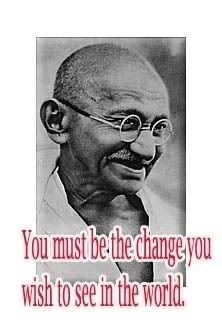
Defeat? In what sense, militarily? I doubt it very much. In that case, the whole world would be destroyed, and there would be no victors. Only losers.
Economically? Culturally? We shall see. The rest of the world has much to offer the west. Energy, work ethic, innovation, spiritual traditions…
I think you know the risk you run of being seen as rampantly xenophobic.
That is a Cold War doctrine. Aside from a handful of Military planners at the Pentagon, I’m not sure you will muster much support at any high level. I can’t see it happening. I want to believe there are enough good people, willing and able to prevent the crazies from launching another World War. That is why the moderate elements in Syria and Iran, beaten, tortured, imprisoned and denied a proper voice, are so deserving of our vocal moral support at least. The same for Myanmar, and all the other world’s trouble spots. Now I know you can point to the television images of chanting, cheering, giddy crowds in, say, Pakistan, or India, waltzing through the streets carrying twenty foot long wooden replicas of nuclear missiles. And we all know how mob frenzy only sees one proper outcome: the total annihilation of “the enemy “. Worrisome, for sure. Could a nuclear war break out there? Or between Israel and Iran? Or between nuclear terrorists and the USA? Nuclear blackmail, perhaps orchestrated by North Korea? It’s certainly possible, but I’m hopeful it will not. Not because such an event is morally unthinkable, but more because I believe that there are enough “cool heads ” around to avert such a human cataclysm.
Still, if I’m wrong, and the invisible line in the sand is crossed, and a war has to be fought, then, I agree. Once a decision is made, and the Peace mechanism has been honestly and fervently tried and found to be failed, then let’s not pussy foot about. We shoot. Reluctantly, but with precision.
But I’m inclined to think the odds favor us having already had our last big war.
I can almost hear the marching music in the background. No disrespect, but… It is naive. The first time you hear a bullet go past your ear, whirra-whirra-whirra, tumbling through the air, whispering to you, you will know how different reality is from Hollywood and your dreams. The first time you are sitting in a helicopter, with a light beam piercing down through the night, and you are warned that the bad guys are shooting, you suddenly feel what it’s like to have a luminescent target painted brightly on your ass. Yes, as men we are defiant, and if you’ve ever been in a good bar fight, you’ll know what it’s like to decide you are going to go down fighting like a wounded bear. But there is no glory in being blown to bits. To lie on the ground, screaming, watching your intestines spill out into the mud. I’ve fought, and arrested a would-be rapist I went hand-to-hand with, alone, for thirty long minutes. But there was no glory in it. Just a vicious, primitive, bestial, fist and feet fight. I head butted him beautifully, and I remember the savage, primitive satisfaction, but there was no glory in it. Forget about the movies, and the marching music. For all the triumphant news reels, what is not shown are the thousands of bodies lying in ugly, grotesque, disfigured, inhuman heaps, over run by rats and cockroaches, in some ditch or hastily dug mass grave. There is no fine music playing there…
What does that mean? Vanilla flavor, rather than strawberry? Come now, do you expect the typical gaggle of politicians and generals today to calmly, rationally, sit down and make long term ethical decisions about anything?
If they can’t properly run the Post Office when they had a Monopoly, can’t ever balance a budget, can’t keep their hands of Social Security “Trust Funds ” (paid in over decades by average Joe workers) (the creeps in power spent THE LOT), how, realistically, do you expect such Narcissistic retards to ever come to any sensible conclusions on the subject of “picking our wars carefully “?
Here’s a video clip I really like. It shows an elected member of Congress, sitting on the Armed Forces Committee, grilling a senior US Military Commander. Yes, that is that Admiral’s Boss. Enjoy it. Trust this dude’s wisdom. Not.
(Click on Me) I AM AN ENLIGHTENED POLITICIAN; PEACE AND WAR IS MY DOMAIN
Again, hints of Cold War rhetoric, maybe even anti-Islamic bias? I don’t know. Which wars do you think we should choose to fight? And in what way do we still hold the “reigns “? Limited War? Guaranteed successful outcome? Just a measly few hundred thousand dead?
I am poles apart from your thinking here. Maintain strong armed forces, yes.
If you want Peace, prepare for War, yes. But actual War constitutes abject failure of that Peace Policy. As for clinically choosing the right “some wars ” to fight, that is elevating our Elected Morons to the status of Gods. Like I said, they can’t run the Post office, never mind choose the right wars.
The best defense we can hope for is an enlightened citizenry, wary of politicians and generals, wary of war rhetoric, committed to peaceful coexistence with our neighbors on this small blue Dot. Strong Armed Forces, well funded, and a large Volunteer Reserve. A big stick, parked politely behind the door.
Will we as a society of Earthlings keep the Peace? There will be plenty of skirmishes, and nasty little local wars. Petty little dictators, thieves, and con artists abound in Politics. Everywhere. But a global conflict? I am very hopeful this will never happen. You may call me an optimist, or relegate me to Honorary Membership of the Purple Rainbow League.
But with an activist public, a wary public, a basically peace loving public, I believe we silly little Earthlings can, in fact, achieve this.
There is hope for the pale blue dot.
I leave you with another video.
Francis Meyrick (c)
Last edited by Francis Meyrick on August 15, 2011, 6:05 am
Castles in the Sky – “More HAM than Radio “
August 8, 2011 in Auto-biographical

(Oh, SH….T!!!)
Castles in the Sky
“More HAM than Radio”
Being by nature and genetic make-up quite happy to exercise my jaw, be it on the telephone or propped against a suitable bar, when it came to learning aircraft R/T procedure, well, the whole process did not fill me with the same stark terror with which it seems to seize some folk. I regarded the whole concept of air-to-ground communication and pilot-speak with mild curiosity. It was something I reckoned I would eventually learn, and I also reckoned -modestly – that I’d probably be reasonably good at it.
I did have ONE problem during my learning. I knew C.B. jargon beforehand, having done quite a bit of truck driving and going to American trucking movies like “Smokey and the Bear”. Maybe subconsciously I had absorbed too much of the cavalier attitude of the American truckers in regards to the use of the airwaves. Thus I used to sense great pain in the instructor’s voice beside me, when he would tell me -somewhat testily- that I was NOT in a “convoy ” driving a Big Rig truck. Such little gems as calling the (Dublin International Airport) Approach Controller “good buddy” drew comments unprintable, to say the least. But I really got a flea in my ear when, upon being told by the same Approach Controller to “Expedite”, I happily chirruped that “Uniform Oscar” had “the pedal to the metal”. I thought it sounded quite cool myself.
But I slowly got the basic hang of things. I learned to speak normally, get the message across, distinguish between QNH and QFE, and slowly but steadily I actually reached the stage where I thought, basically, that I was kind of brilliant. The bee’s knees on Aviation Radio, the Charles Aznavour of the Irish Airwaves.
Two events, however, were to sneak up and upset my pride.
The first occurrence was when I was on a business trip to Dublin in my own Cessna 172 SkyHawk, only just after getting my Private Pilot’s License. I was plowing along through a hazy murk enroute to Brecon in South Wales. It was at this stage that a kind Air Traffic Controller asked me what my “Flight Conditions” were. “Oh”, I thought brightly, “He must want to know what it’s like up here. I’ll fill him in.” So I did. At great, detailed, drawn out length.
“Ah, well, Bristol, it’s kinda hazy up here. And, errr, well, visibility is about, errrr, four to five miles, and, errrrr, there’s quite a bit of cloud above me, and, errrrr, it’s raining slightly.” I reckoned I finished on a brilliantly helpful note. The controller, without a flicker of emotion in his voice, thanked me kindly for my information, and I flew on, gratified and pleased to have been of assistance to this hardworking supervisor of the Airways. It was not until about ten minutes later, that the first seed of doubt entered my mind. I heard the exact same question repeated to another aircraft. “Sir, what are your flying conditions?” The resultant answer startled me in its brevity. The other pilot merely replied:
“Victor Mike Charlie”.
Puzzlement. Victor-Mike-Charlie? Who is he?
I thought hard. And the harder I thought, the more I began to wonder. Somewhere, deep down, a little voice was telling me that maybe I ought not to have slept through so many lectures on my PPL course. Maybe I should have studied a bit harder, and not just wanted to fly…
I asked a Flying Instructor about it afterwards. What does Victor-Mike-Charlie mean? “Visual Meteorological conditions” he said. “As opposed to Instrument Meteorological Conditions. ATC may ask you that, when they want to know if you’re in cloud or not. All you do is reply VMC or IMC”.
Oh…
Sheepishly, I told him what I had accomplished. When he had finished laughing, he suggested I might re-visit the text books.
And so I learned a bit more about English as she is spoke on the R/T. I learned that maybe I was not quite as smart as I thought. But I still reckoned I was pretty good. I reckoned that my voice in a controller’s headset would not betray my inexperience. I reckoned nobody would smile and think: “Happy days, there goes a novice on his own.” I reckoned…
Then… came the Luton episode. It still sends shivers down my spine.
It all started out just fine. Peachy perfect. I had been abroad on a business trip, during which all had gone smoothly, and I had picked my way solo across various international frontiers, and through an assortment of control zones. I had landed back at Luton International, near London, to clear Customs. This being accomplished, I had taxied out the the holding point, to do my pre take-off checks, prior to the last five minute hop back to my home base of Panshanger. It was a sunny day, and I was in roaring good form. Small wonder then, that I hummed a little ditty to myself, as I performed the ritual of the pre take-off checks. I think it owed something to the character of Winnie the Pooh, the honey loving, cuddly bear, whose adventures were read to me, over and over again, by my Irish Mother. It went something like this:
“What a lovely day
(tiddely pom)
To fly my plane
(tiddely pom)
Up through the Blue
(yahoo! Wahooooooooo!)”
After this and sundry other stanzas, during which I kept my left hand on the control column, and allowed my right hand to “touch-drill” the items being checked, I continued with the same undiminished enthusiasm. But now some Italian Opera was creeping in as well.
“Trim-oh-trim-oh-trim for LIFT-OFF
(tiddely pom)
Tighten friction NUT
(tiddely pom)
Mixture RICH
(tiddely pom)
Pitch FINE
(tiddley dine)
Fuel ON
(tiddely pom)
Flaps UP!
(tiddely pup!)
Having conscientiously carried out my duties so far, I finished off with my grand opera finale”
“ALL SYSTEMS GOOOOOO!
(HO-HO-HOOOOO!!!)
Let’s call the tower…..!”
Errrrr…..
And it was at that stage that I froze. For as I was about to “press to talk”, I realized to my horror that I was “already pressed”. I stared uncomfortably at the control column, with my left mitt firmly wrapped around it, and my thumb unintentionally firmly screwed down on the tiny unfamiliar button. The radio was correctly set to the Luton International Airport TOWER frequency, and all around me and my tiny little four place Cessna, big airliners with hundreds of passengers were landing and taking off, taxying, stopping, waiting…
Waiting…
“OH-OH-OH DEAR…!”, I thought, a fountain of panic welling up in me.
With a muttered “Whoops!” I let go, waited for a second, and then, somewhat tremulously, I squeaked:
“Tower, Gulf-Papa-Fox is ready for take-off…”
The answer startled me. There came, over the headsets, a great tidal wave of laughter. It sounded as if every controller in creation, not to mention every pilot on frequency, was hooting it out with great delight. It went on and on, and I slumped down in my seat, trying to make myself smaller. Disappear, even. My brain raced, trying to grapple with the horrible realization that I had cheerfully spent the last few minutes totally blotting out Luton Tower frequency. I could visualize a court martial, loss of license, arrest, furious airline commanders, instant firing squads…
The laughter subsided a little, and I realized the controller was trying to talk to me, with people in the background still busting themselves laughing. His voice sounded choked, as if he was striving valiantly to sound normal. He was in hysterics as well… I felt terrible.
“Golf-Papa-Fox, we KNOW you’re ready for take-off, we’ve all been listening to you for the last few minutes. You’re cleared for take-off, right turn to Panshanger…”
A little yellow-and-white Cessna crept out onto the main runway. A casual bystander might have remarked that the aircraft “slunk out”, and that little could be seen of the pilot’s head and shoulders except a nose and two bulging eyes, peering furtively out over the instrument cowling.
As I left the Luton zone, a voice which still seemed to contain laughter, cleared me to change frequency, and wished me a “Good Day”.
Nice fellows, those Luton ATC chaps. And those Airline Captains. And everybody else listening. They sure know how to forgive amateurs who royally screw up on R/T procedure…
Francis Meyrick
(c)
Last edited by Francis Meyrick on August 8, 2011, 6:49 pm
The Great Sidecar Experiment (Finale)
August 5, 2011 in Auto-biographical

The Great Sidecar Experiment
Part Six: Finale
Down the last stretch of road we hurtled, like a cannon ball on steroids, and I could see the large red-and-white imperative STOP sign now coming very quickly into view. I was experiencing a greatly agitating awareness of the extreme Fragility of Man. The crossing car was now also clearly in view, and I was convinced our next appointment was with the unsuspecting driver. We didn’t just drive through the STOP sign. It was more a case that we BLEW through it, as if it wasn’t there, and didn’t matter. The strangled sound effects coming from Deklan and myself were now somewhere high up in falsetto mode, and I know I was at that level of awareness referred to by psychologists as peak experience. Everything was very clear to me, and destined to remain embedded in my consciousness for the rest of my Life: the sun, shining through the leaves, the moss on the brick wall, the discarded candy wrapper lying in the gutter… And the black and white saloon, cutting right across our path from left to right. I believe the heightened senses are frequently associated with a fear of dying. In my case, fear had nothing to do with it.
I was bloody petrified.
I was so utterly convinced that we were going to ram the front right wing of the approaching car, that I actually was pulling up my knees. Perhaps it was a Freudian reflex, and I was trying to revert to my poor Mother’s womb and the foetus position.
A split second later, the car driver, showing superb reactions, absolutely jammed on his anchors. I had a momentary grand stand view of his radiator grille, rearing above me, as we shushed by, mere inches ahead, at Mach One Warp Speed. But I had no time to reflect on this highly unusual angle to be viewing a car radiator grille. We were now being swept on to the next phase of our ballistic trajectory. We crossed the road, mounted the grassy bank, and hurtled across twenty yards or so of grass, weeds and dandelions. Ahead of us spread out the twelve foot stone wall, built over the centuries by hand, by countless generations of toiling peasants. Three foot thick, crafted to survive hundreds of years of weather and erosion, and consisting of the finest granite in Europe.
We were dead men, and I knew it. I wished I had been a better person, and remained an Altar Boy. At the penultimate moment of our charge, I saw the smallest details of the stone wall. The grooves, the different colorations, the tufts of grassy growth, embedded in cracks, clinging to Life…
There came an explosion of black stars. Somewhere, somehow, in a far distant Galaxy, things were happening. But it didn’t really matter. Lights came on and off, and a crushing weight slammed against my chest. I felt a vague puzzlement, a feeling that I should be paying attention to something, but I didn’t know what. Time, presumably, if there was such a thing as Time, slipped by, and I opened my eyes again. I was looking UP at a dandelion, from ground level. That didn’t seem right, so I shut my eyes. I thought about maybe going to sleep, and forgetting about the whole thing, especially the dandelion. But now an insistent sound was invading my dim consciousness. It sounded like a massive, distant, growling noise. I opened one eye, experimentally, and observed that beyond the massive dandelion, lay another world. A slow awareness now started creeping back, and I wished it wouldn’t. Because I hurt like hell. Every part of me hurt, most especially my head. And the ringing and raging inside my skull was not being helped by the distant Growling Sound. Slowly, very slowly, I lifted my cheek a half inch off the dirt. Now I could see movement. I blinked, and I know I groaned. The Distant Sound belonged to a cavalcade of motorbikes, hundreds of them, all pouring down the hill, like a plague of locusts . They would be here in a minute…
A face swam oddly into view. It belonged to an elderly gentleman, presumably the driver of the black-and-white car. He was saying something about not moving. I totally ignored him, and slowly moved my thudding head the other way. Deklan, sitting up, propped up against the remaining wreckage of the BSA, was holding his head, and wailing pitifully.
Great… Just frickin’ great…
The first bikers were now sweeping around the last curve, going hell-for-leather, and approaching the imperative STOP sign, which we had so blatantly ignored. I tried to move, with some vague thoughts of quickly hiding, but the fireworks in my head defeated the urge. The first bikers, ghouls, detractors, and piss-takers were now pulling up, jumping off their bikes, and running towards us. A wave of resignation swept over me. The facing, past the dandelion, of the inevitable. The leading biker, stupid looking dude with a beard, put on a passionate display of caring, and pretending to give a rat’s ass.
“Jayzus, Francis, are you all right?”
I thought carefully about my reply. It was hard, mustering much dignity, face down in the dirt, peering out from behind a dandelion. Beside me, Deklan’s groaning was intrusive. It detracted from my attempt to regain dignity and composure. I debated remarking casually that the sidecar was going great, but that the brakes maybe needed calibrating. But somehow, I knew they weren’t going to fall for that.
Deklan’s groaning was now getting on my nerves. Dozens, hundreds, thousands of motorbikes were now pulling up, and we were increasingly surrounded by a sea of faces. The gig was up. There was no escaping the total, utter humiliation. I needed to go asleep…
Somebody shook me by the shoulder.
“Jayzus, Francis, are you all right?”
Sixteen different suitably withering retorts vied for supremacy in my mind. I looked my questioner as squarely in the face as I could, with as much dignity as I could. Which was hard. Giving the handicap of my location.
“F@#!!K YOU”, I said, with feeling.
Then I turned my head slowly to Deklan.
“And F@#!!K YOU TOO”, I added, for good measure.
* * *
They whisked us off in an ambulance, and I remember being annoyed at the siren taking us away. In my mind at the time, it might not have been just quite as bad, if they had taken us away without a siren. We might have passed it off later as just a routine check up, you know.
They patched us up, and that took a little while. I had severe concussion, amongst other things. Although that was my first ride in a meat wagon, it was not destined to be my last, as I shall recount at a later stage, elsewhere.
There are three small sequels to this true tale of engineering fiasco.
The first is that the reason for the sudden, total brake failure was traced to the small lead stop weight at the end of the brake cable deciding to dis-attach itself. Not an unheard of event, but the timing sure sucked.
The second is that it is said that there is special Irish Saint who looks after drunks and bikers. I don’t know his name, but I’m very grateful to the fellow. I guess he must be real busy. It turned out that the winds of Ireland, over the centuries, had blown dust up against the base of that old granite wall. Itself designed to withstand the centuries. Well, patiently, Mother Nature had seeded the dirt that blew up against the wall. That had grown grass and stuff, and in turn, more dust and dirt had attached itself in front of the wall. The net result of this timeless process, was that there was a sort of reverse ski-jump of dirt up against that wall. The front wheel of our runaway M21 had thus neatly turned UP the wall, and we had done a sort of looping somersault, as opposed to having our thick skulls test the integrity of three hundred year old Irish granite.
And thirdly, after they whisked us off, sirens and lights going like the clappers, it later emerged that souvenir hunters -dirty bastards- helped themselves to the tangled remains of our Great Sidecar Experiment. Which is why, in select bars around the counties Dublin and Wicklow, such as are frequented by members of the biking fraternity, you will, to this day, find venerable pieces of the Great Experiment, attached to various walls and rafters, aswith some faded photographs of two motorcyclists driving by on a pea green BSA M21 sidecar outfit. Striking an odd looking standing double ballet pose…
The origins of those pieces increasingly being shrouded in the mist of times, and bygone folklore, it seemed only right that your writer, being somewhat integral to the entire debacle, should attempt to put the historical record straight. There have been many impostors who have claimed participation in this gigantic bungle, but they are all feckin’ liars. Anyway, we NEARLY fooled ’em good.
Finally, I might add that now, many years, miles, and motorcycles later, approaching sixty years of age, I have not lost all the urges. I own a small collection of motorcycles I am very proud of. Flying helicopters for a living, and still enjoying it hugely every day, is a variant on motorcycling of course, and appeals to the very same juvenile instincts for speed, excitement and freedom. And the need to show off. As regards other urges, modesty forbids me from elaborating further.
And, would you know, “Honda Lafayette ” have an old Ural Sidecar Combo for sale. They have had it for years. Seems nobody wants it. It is painted in a real interesting pea green as well. I’ve been tempted to buy it.
I just wonder…
what that old Irish Saint…
would say to that…?
Francis Meyrick
(c)
Last edited by Francis Meyrick on June 6, 2015, 4:25 am